
Illegal defeat device due to the use of a thermal window
According to EU Regulation 715/2007, a defeat device is any element of design which senses temperature, vehicle speed, engine speed (RPM), gear engaged, intake manifold vacuum or any other parameter for the purpose of activating, modulating, delaying or deactivating the operation of any part of the emission control system, that reduces the effectiveness of the emission control system under conditions which may reasonably be expected to be encountered in normal vehicle operation. This includes in any case a so-called thermal window.
A thermal window refers to a temperature range (e.g., 15 to 30 degrees Celsius) in which exhaust gas aftertreatment functions normally through the recirculation of exhaust gases into the engine's combustion chamber. Outside of this narrow temperature range, exhaust gas recirculation („EGR“) is drastically reduced, so that the maximum permissible NOx values of 180 mg per driven kilometer under Euro 5 can no longer be complied with. In the affected Volvo vehicles, tests demonstrated the following:
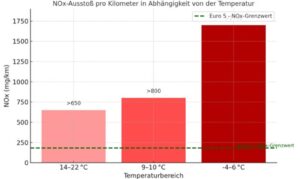
For comparison, the average annual temperature in Austria is about 9 to 11 degrees Celsius.
Defeat devices are only permitted in vehicles approved for operation within the EU if they are „necessary“ to protect the engine from damage or accident and to ensure the safe operation of the vehicle. As experience from previous diesel scandal lawsuits involving VW, Audi, and Mercedes shows, this is not the case with Volvo's thermal window. Based on current knowledge, it must be assumed that the thermal windows installed by Volvo in the affected models are illegal defeat devices.
Affected diesel vehicles: All Euro 5 and 6 models with 2.0 l diesel engines (D3 / D4) are under suspicion
Specifically affected by the KBA notice are vehicles of the Volvo XC60 2.0 D (Euro 5) model. Since, based on current knowledge, the thermal window is also used in Euro 6 diesel engines, it can be assumed that the Volvo diesel scandal could also expand to Euro 6 diesel models. The affected D3 and D4 diesel engines (Euro 5 and 6) are used by Volvo particularly in the following model series:
- XC90, XC70, XC60, XC40
- V 90, V 70, V 60, V 40
- S 90, S 80, S 60
What claims do those affected by the Volvo diesel scandal have?
Previous diesel scandal lawsuits have shown that affected parties can assert the following claims in court in particular:
- Damages for loss of value due to unauthorized defeat device
- Declaratory interest due to imminent loss of license
- Cancellation of the purchase agreement
Previous case law involving comparable cases from other manufacturers has shown that claims for damages amounting to approximately 20% of the purchase price may be asserted. Alternatively, as the affected party, you have the option to rescind the purchase contract; however, in this case, you must pay a reasonable fee for use, so this option is only economically viable for vehicles with fewer than approximately 100,000 kilometers on the odometer. However, the specific claims that may actually be available must always be examined on a case-by-case basis, as the amount of damages claimed by affected parties may vary depending on their individual circumstances. Given that Volvo is currently refusing to provide remedies or has not yet offered them, there is also an interest in establishing Volvo’s liability for future damages that cannot yet be quantified.
For further information and individual consultation, please feel free to contact us Roman Taudes and a team available at any time. Contact us at office@atb.law or by phone at +43 1 39 123 45.